
Finding Springfield Residents Responsibly
A Springfield residents directory search works best as a short chain of official checks. Start with the record that matches the question. Property records identify an assessed owner, deeds identify parties to a recorded instrument, and court records identify parties to a case. None is a full household list. A mailing address may differ from the parcel address, and a registered agent may have no home connection to the address in a business filing.
Write down the date searched, exact spelling, role, record number, and custodian. Common names demand more than one matching fact. Initials, married names, street abbreviations, annexations, and older ward lines can all split one person’s trail.
Choose the least intrusive source. If the question is who owns a parcel, stop when the assessor and deed answer it. If the goal is a family-history link, use a dated directory and obituary before seeking a restricted vital record. A phone number can help distinguish two public listings, but it does not prove current occupancy. The sound conclusion names the source and its date: an owner on an assessment, a grantee on a deed, or a party in a case.
- Search the county property roll by owner or address, then save the parcel number and situs address.
- Check a deed party in the Recorder index when ownership, a transfer, or a lien matters.
- Use the Circuit Clerk for a public case connection and compare the case year and party role.
- For old households, move to Lincoln Library directories, newspapers, and obituary cards.
- When no index exists, send a narrow request to the office that actually keeps the series.
Springfield Resident Record Keepers
Springfield is both the Sangamon County seat and the Illinois capital, so resident records are split among municipal, county, and state offices. The Supervisor of Assessments supports owner and parcel searching. The Recorder keeps deeds and other land instruments. The County Clerk handles vital and election records, while the Circuit Clerk keeps court files. Municipal permits, code cases, cemetery files, and many city indexes belong to the Springfield City Clerk instead.
Sangamon County Clerk
200 S. Ninth Street, First Floor
Springfield, IL 62701
217-753-8683
For a full address-first method, use the Springfield street directory. Court copies do not go through the Illinois Freedom of Information Act. Ask the Circuit Clerk directly by portal, counter, mail, or email.
Searching Springfield Property Owners
The Sangamon County Property Tax Search is the clearest official start when a name or street is known. A result lists owner name, parcel number, address, and links to parcel summary, assessment, billing, sales, and tax history. Treat the owner field as an assessment record, not proof that every named person lives on the parcel.
| Search field | How to use it | Local limit |
|---|---|---|
| Parcel number | Enter a full number, or at least five digits | A full parcel overrides other criteria |
| Owner name | Use last name first or the start of a surname | Entity and mailing names may appear |
| House, direction, street | Choose East, North, South, or West if needed | Over 300 results must be narrowed |
| City | Select Springfield within the county roll | Mailing city and jurisdiction can differ |
The official property search form shows those owner, house, direction, street, and city controls.
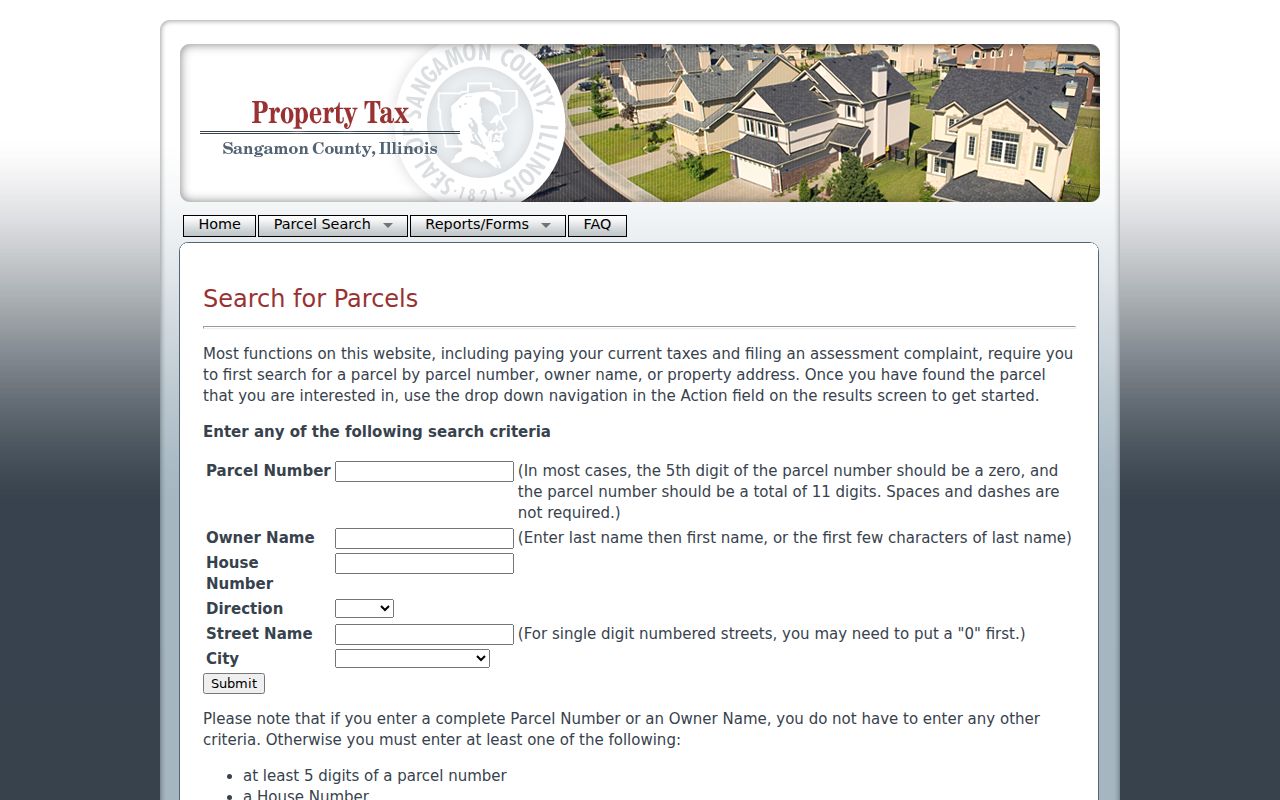
Its fields can narrow one parcel well, but situs and mailing addresses still mean different things.
Springfield Deed Party Records
The Sangamon County Recorder indexes grantors, who give an interest, and grantees, who receive it. A deed, mortgage, lien, easement, release, foreclosure, or plat can place a name in the index without proving residence. Online data and images cover 1982 forward. Deed books are scanned back to February 16, 1901, and deeds from 1950 through 1969 are indexed and viewable online.
Older research uses the free public terminal and office microfilm or microfiche. Bring a document number, book and page, parcel, legal description, or sound address lead. Free Data Search gives data without images; Tapestry charges per search, and Laredo requires an account. Copies may be requested at the counter, by mail, or by phone. Staff can locate records, but the office does not conduct title searches or broad historical research.
When the address has changed, follow the legal description instead of forcing the current street number into an old index. Compare subdivision, lot, book and page, recording date, and each party’s role. Farm ground may have no useful street address and often requires a parcel number. Standard and certified copies have different fees, and the Recorder estimates roughly seven to ten business days for copies returned through its request process.
- Parcel
- A mapped unit of land with a county tax identifier.
- Index
- A finding aid pointing to a record, not the full document.
- Roll
- An official list created for one defined purpose.
- Criss-cross directory
- A volume arranged by street or phone instead of surname.
Springfield Court Name Checks
The Sangamon County Circuit Clerk Records Lookup is a free case-information gateway. Search by name, case number, or filing date, then compare case type, year, date, and party role. Sealed, juvenile, adoption, mental-health, expunged, and impounded matters are excluded or restricted. Older material has uneven online coverage.
The official portal capture includes its restricted-record warning.
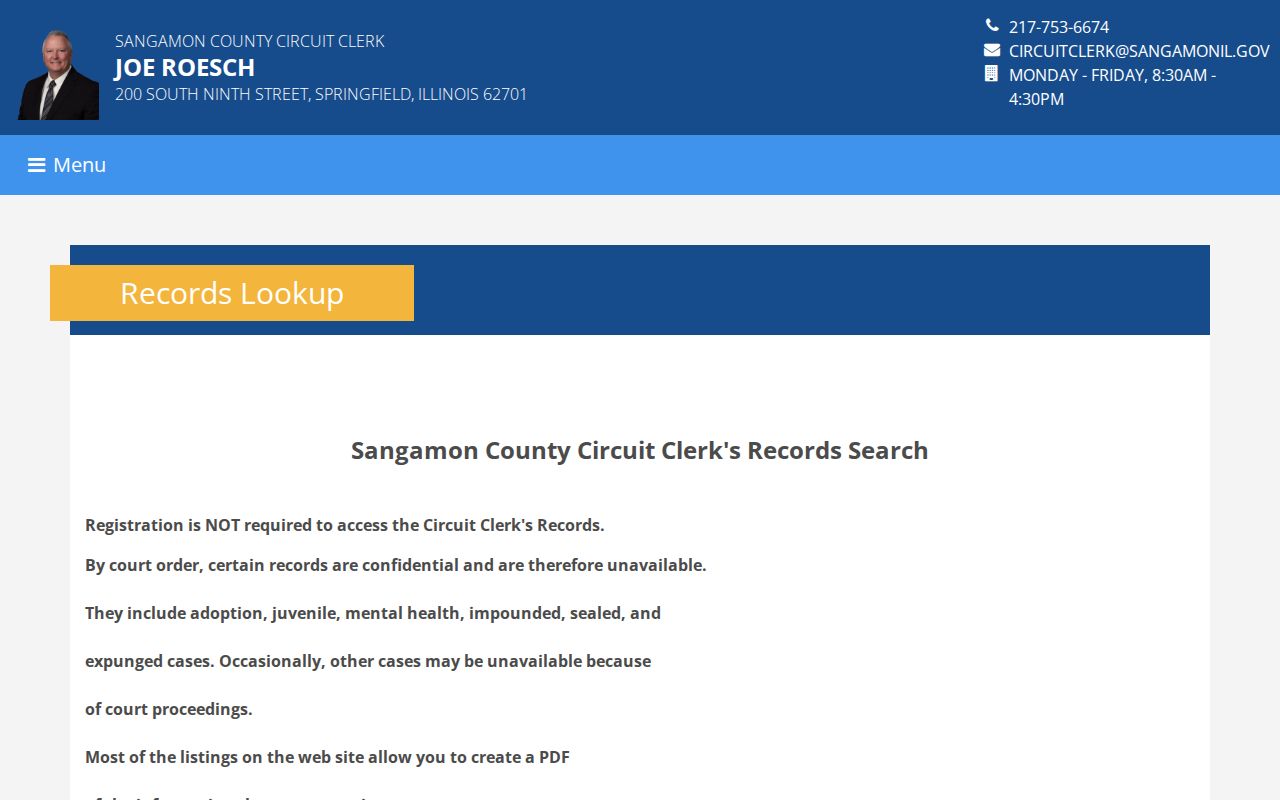
A hit proves only that a name is indexed in a public case. Obtain copies from the Circuit Clerk by mail, email, counter, or its request route. Courthouse public terminals and the law-library terminal are other channels. Court files are judicial records, so FOIA is not their request method.
Current Springfield Directory Sources
No present-day Springfield residents directory covers all households. Each official roll has a narrow purpose and lists a different relationship to Springfield.
| Official source | What the name means | Keeper | Access path |
|---|---|---|---|
| Property tax roll | Assessed owner or entity | Sangamon County | Free portal and office help |
| Voter status lookup | A person checking registration | Illinois and County Clerk | Identity and address fields |
| Land index | Party to a recorded instrument | County Recorder | Web products, terminal, microfilm |
| Court index | Party to a public case | Circuit Clerk | Free lookup and copy request |
| Neighborhood layer | Organization covering an area | Springfield OPED | City list and ArcGIS layer |
For one named person, the Springfield resident lookup supplies the focused verification sequence. Do not merge results based only on a matching city.
Checking Springfield Voter Status
The Illinois Online Voter Registration Lookup asks for first and last name, birth date, five-digit ZIP code, street number, and a selected street. It is meant for a voter checking their own registration, not for browsing a Springfield block. A successful match is evidence of registration based on supplied facts, not a general household roster.
Sangamon County separately accepts orders for voter lists, labels, maps, and election material. Those products require a written request and political-use affidavit. The County Clerk is the phone and counter fallback when the online lookup fails. Historical election returns belong with Lincoln Library, UIS, or the Illinois Regional Archives Depository, not the current registration form.
A failed match can reflect a mistyped birth date, a ZIP mismatch, an abbreviated street, a recent move, or a registration update still in process. It should not be read as proof that a person is unregistered or absent from Springfield. Call the elections office using its published contact, and let staff explain the proper correction or verification channel. Do not use a county list product as a substitute for the personal status form.
Use records lawfully. Public indexes support legitimate personal, historical, and civic research. Never use a Springfield address trail to stalk, harass, intimidate, or harm anyone.
Springfield Municipal Name Records
The Springfield City Clerk keeps a separate municipal trail. Its FOIA Records Directory points to council minutes, licenses, annexation files, plats, petitions, zoning dockets, permits, cemetery deeds, engineering files, Sanborn material, tax-owner cards, and code records. It identifies series, but does not promise that each has a public name search.
Requests may be filed online, at the counter, by mail, email, or fax. Describe a precise record, office, address, and date range instead of asking staff to research a person. Illinois FOIA, 5 ILCS 140, generally provides five business days for a noncommercial response and allows a qualifying five-day extension. The first 50 black-and-white letter or legal pages are free under the standard state rule.
The Springfield online request capture shows contact fields and the records-description box.
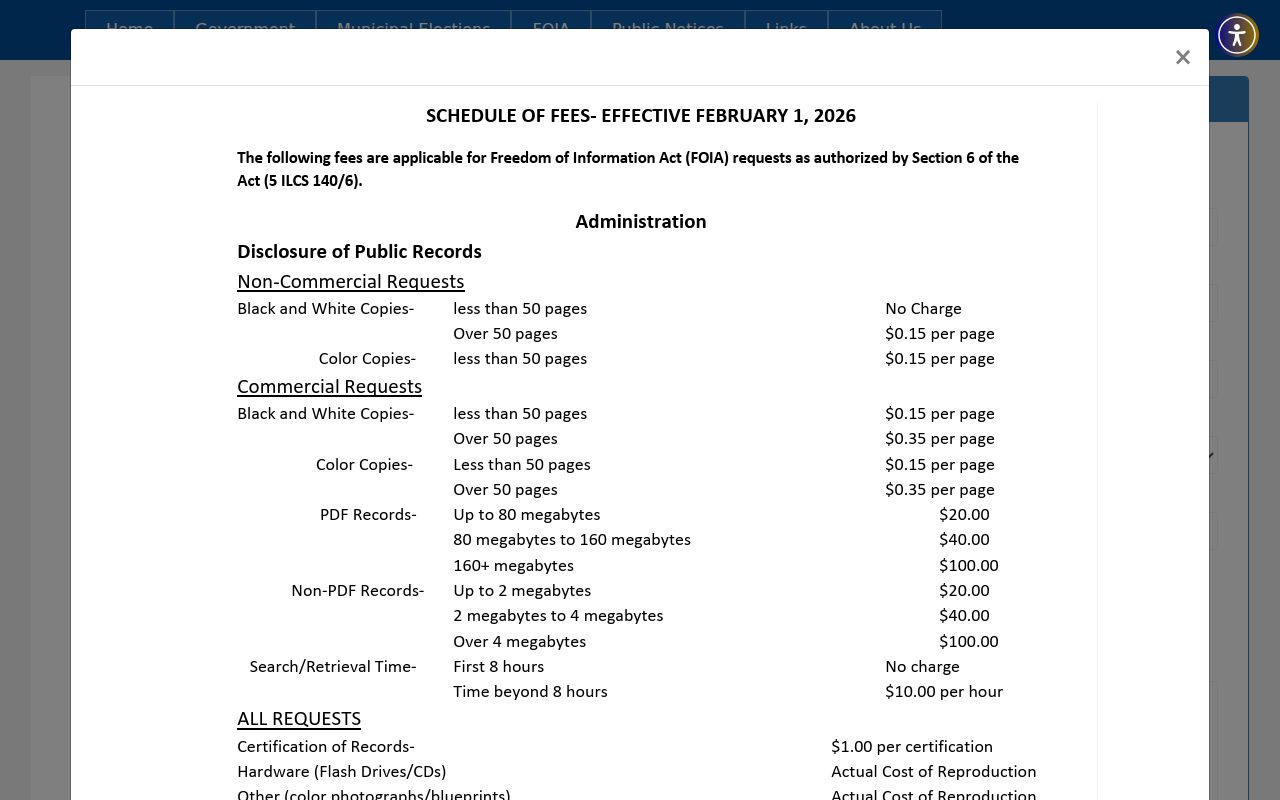
The open box is most useful when it names the exact permit, owner card, council record, or cemetery file sought.
Springfield Vital Record Limits
Vital records carry the strongest access limits in the Springfield residents directory. Sangamon County birth and death records begin in 1877. The City Clerk offers a separate route for Sangamon County births and deaths from 1985 forward. Certified copies require eligible status, identity, and supporting documents. A public county birth index covers names and dates for births at least 75 years old, but an index row is not a certificate.
County marriage records reach back to 1821, and anyone may obtain a copy under the clerk’s stated process. Online, mail, email, and counter routes vary by series. For older life events, combine the County Clerk with the State Archives, IRAD, and Lincoln Library obituary sources. A notice may yield a date, yet only the proper custodian can certify the record.
Springfield Library Name Trails
Lincoln Library’s third-floor Sangamon Valley Collection is the strongest Springfield stop for a historical name or address. Its noncirculating holdings include city and county directories, yearbooks, obituary cards, newspapers, maps, vertical files, photographs, and local histories. Library databases add newspaper and genealogy searches, while staff can help identify the right volume or microfilm.
UIS Archives holds regional manuscripts, images, oral histories, and university records by appointment. The Abraham Lincoln Presidential Library provides newspaper microfilm and manuscript-room access with a researcher card and appointment. The Sangamon County Historical Society offers local publications and referrals. Illinois State Archives and IRAD cover older court, coroner, jail, school, town, and municipal books. These fallbacks matter when no online name index exists.
Bring a focused question to an archive: a surname, approximate year, street, institution, or record type. Ask whether the item is on an open shelf, microfilm, a licensed database, or in closed stacks that require advance retrieval. Preserve the volume title, printed date, page, call number, and repository. Newspaper OCR can miss initials and damaged type, so browse the date range or microfilm when keyword search fails.
Springfield Historical Resident Directories
The oldest verified digitized Springfield city directory in the research is the 1857–58 volume compiled by B. Winters & Co. Entries may use initials, occupations, business sites, cross-streets, side-of-street abbreviations, and an “h” marker for a home. Later books can add spouse names, phone numbers, an “r” for residence, and an asterisk marking an owner. Read the key before deciding what a mark means.
Printed dates can disagree with catalog labels, so check the scan’s title page. Search several years around the target date and pair an entry with a census, deed, obituary, or map. Lincoln Library’s obituary card index begins in 1861. The Springfield city directory page covers the full shelf and household method.
Springfield Records Through Time
Sangamon County records reach to 1821, and Springfield incorporated in 1832. The city later shifted among ward, commission, aldermanic, and strong-mayor systems. A historical name may therefore appear by county, city, ward, office title, or a street later annexed or renamed. Census geography also changes over time.
Online coverage is not the same as record survival. Recorder images begin far later than the first deed books. Circuit Clerk scanning covers selected records from 1821 through 1982, while its live portal is later and category-specific. City ordinance, police journal, school attendance, and election-return series survive on microfilm. Sanborn maps supply building and street context, not occupants.
The City Clerk records directory makes the many municipal layers visible.
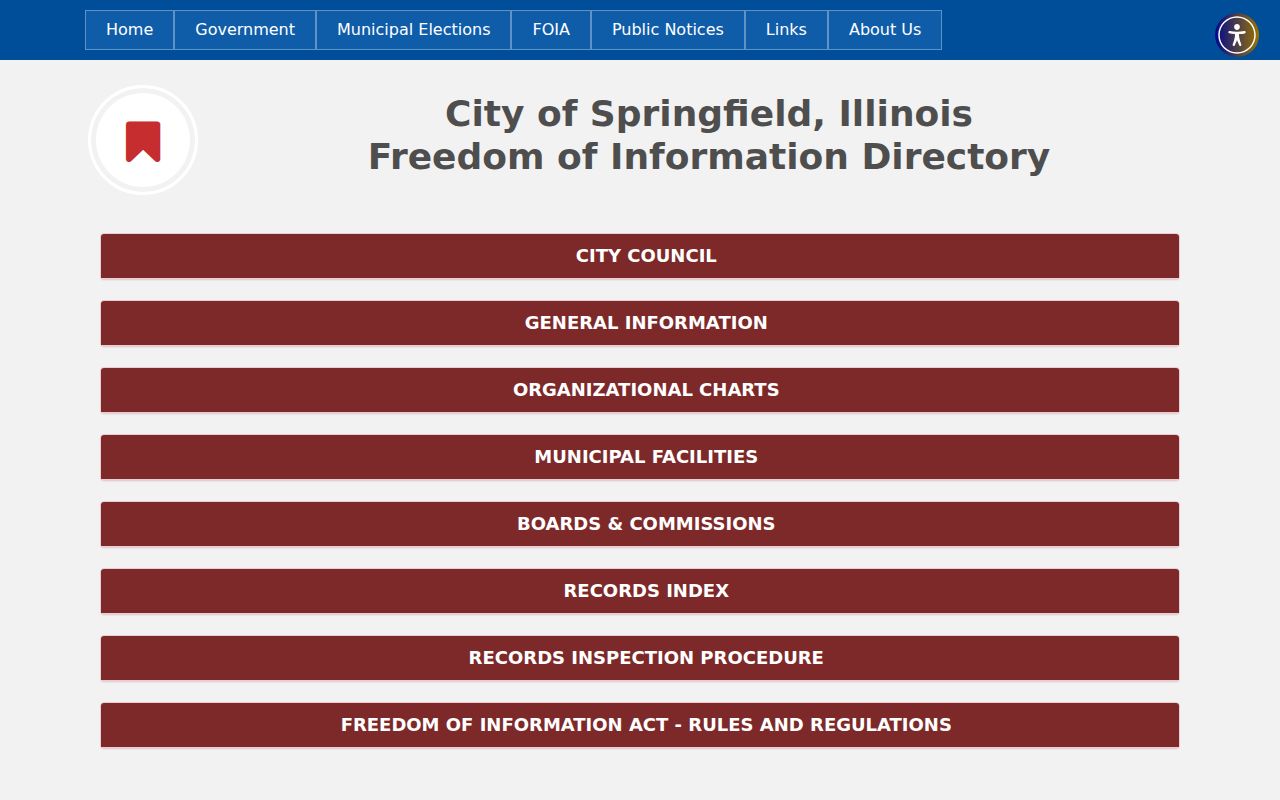
Its permits, council files, cemetery records, maps, and owner indexes show why a sound search follows each subject to its custodian.
Official Springfield Rolls Compared
Official sources have a named custodian, a defined purpose, and a process for copies or correction. Commercial people-finder services may merge old addresses, relatives, phone records, and unverified material. Such results can be leads, but they cannot establish what an official parcel, deed, case, or vital record says.
| Feature | Official Springfield source | Commercial category |
|---|---|---|
| Meaning | Defined by the office and series | Often merged from several sources |
| Date and role | Tied to a filing or assessment | May be stale or unclear |
| Correction | Custodian process exists | Provider-specific dispute or opt-out |
| Best use | Confirm one precise public fact | Lead only, then verify |
Use the least intrusive record that answers the question. Respect addresses protected by the Illinois Address Confidentiality Program, and never treat a missing web result as proof that no record exists.